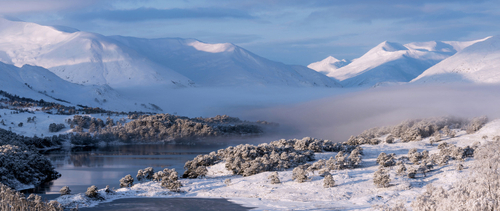
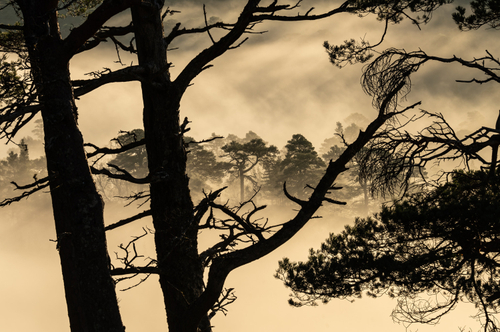
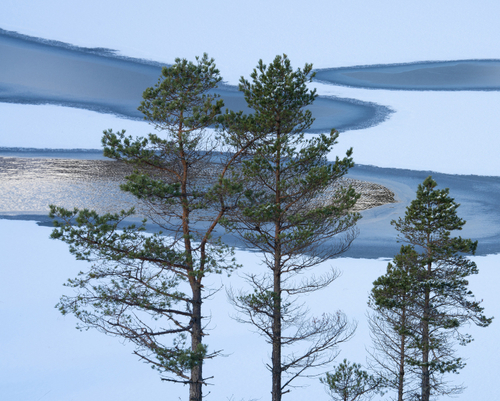
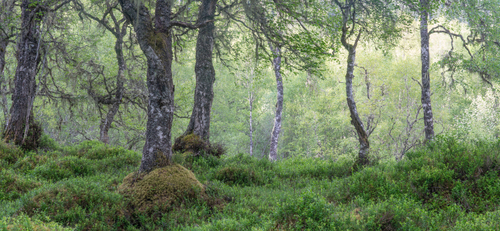
In Scotland, there is beauty all around us, but it's hard to find a natural landscape free from human intervention. Around 10-12 thousand years ago, as the vast frozen ice sheets of the last ice age retreated, abundant life returned to the landscape. Lichen and mosses were likely the first to return, followed by grasses then early trees like juniper, willow, rowan and birch. Scots pine arrived later and became the defining species, of what was to become the Caledonian forest. These pinewoods expanded to cover around 20% of Scotland's landmass supporting an ecologically diverse range of species including apex predators like wolves, lynx, and brown bears. The Caledonian forest began to recede around 5000 years ago due to a combination of climate change and human intervention. Today only small fragments of this great forest remain, largely in the northwest Highlands and the Cairngorms National Park.
I have spent many days exploring Scotland's ancient Caledonian forest, often returning to the same locations. This portfolio includes some of the more unique (and photogenic) moments I have witnessed over the last few years.
In Scotland, there is beauty all around us, but it's hard to find a natural landscape free from human intervention. Around 10-12 thousand years ago, as the vast frozen ice sheets of the last ice age retreated, abundant life returned to the landscape. Lichen and mosses were likely the first to return, followed by grasses then early trees like juniper, willow, rowan and birch. Scots pine arrived later and became the defining species, of what was to become the Caledonian forest. These pinewoods exp...